Failing Econ 2129
Sometimes the world hands a blog-writer a topic on a silver platter. All one can do is say ‘Thanks, world’. Then write the article.
Reading the WSJ this week I came across a story with this headline:
Delta’s Ace in the Hole for Surging Jet Fuel Costs: Its Own Refinery
Airline’s 2012 acquisition of Pennsylvania refinery has been called both prescient and pointless
I taught Delta’s acquisition of that refinery as a case study on vertical integration in my Managerial Econ class back in the day. And, wouldn’t you know it, everyone who has anything to say about it in the WSJ article would have done rather badly in my course.
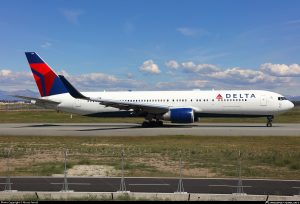
Here’s the sitch. Delta Airlines did indeed buy a (money-losing at the time) refinery in Pennsylvania in 2012. In principle, this seems to make some kind of sense. There is no doubt that fuel costs are an enormous fraction of the cost of flying people around in airplanes. So, the thinking goes, buy an oil refinery, and you can supply yourself with jet fuel from your own refinery, without the markup that other refiners would charge you. Instant savings.
The technical term for that argument is – ‘wrong’.
First, just think about it for a minute. If that argument is correct, then every airline should own a refinery, and every automaker should own a steel plant, not to mention a tire company, and every grocery chain should own dairy farms and cattle ranches.
And yet – they do not. There are some good reasons for vertical integration, some situations in which it can increase profit, but ‘cutting out the middleman’ ain’t one of them.
The reason is not that hard to see. Suppose Delta is flying planes and being charged the going price of $4/litre for jet fuel by its usual suppliers. That is a cost to Delta, and is revenue to the refiners it buys from.
Now it buys a refinery, and the idea is that it sells the jet fuel to itself for only the cost of producing the fuel, which is, say, $3/litre. It thus saves $1/litre, and if it buys 1million litres per month, it adds $1million per month to its bottom line because owning that refinery lowers its fuel cost that much. Its rivals are all paying $4/litre. Advantage, Delta.
But wait a minute, ‘Delta’ now consists of an airline and an oil refinery, and that reduced $1million in cost to Delta every month is also a reduction of $1million in revenue to the refinery. Why? If the going price is really $4/liter, it could sell those 1 million litres to other airlines at that price, but it does not, it sells it to Delta at cost.
The Delta division of the integrated company will have $1million in reduced costs and the refinery division will have $1million less of revenue each month. Not an advantage, just a change in the bookkeeping entries for the two divisions of newly-integrated Delta.
Now, there is a way for Delta to increase its profits at the expense of its rival airlines, and that would be to buy up nearly all of the jet fuel refining capacity available. That would make it a monopoly in jet fuel production, always good for the bottom line, and it could sell to itself at a price lower than it sells to other airlines.
Of course, the anti-trust authorities would not allow that to happen – or so I would hope.
Let’s go to the WSJ article, folks.
Ed Bastien is the CEO of Delta. Here’s a quote:
“We don’t know where fuel is going to go, but to the extent fuel stays elevated, that refinery will continue to help us,” Bastian told reporters this week. The airline said the refinery will boost its expected second-quarter earnings by $300 million.
Bastien runs the airline, not the refinery, so he need not mention that the refinery’s earnings will be down $300m. And of course, no one ever sees money you did not make, not even the accountants. Think how much better Delta’s earnings could be if their refinery paid Delta to take the jet fuel and burn it in their jets. I bet Ed never thought of that one.
Here’s another quote which is just complete nonsense:
Delta’s refinery is run by a subsidiary that sells its jet-fuel output to Delta at market rates. The arrangement allows Delta to avoid paying outside suppliers for the work of churning oil into fuel.
Um, if the subsidiary is selling the fuel at ‘market rates’, then Delta is paying the same price it would if it bought from another refinery. That is what market rate means. So then it is in fact paying the same as it would to an ‘outside supplier’. Like I said, those two sentences make no sense at all.
Fortunately, some economists are quoted in the piece also. They will sort things out for WSJ readers, I’m sure. Here’s one quote:
Ed Hirs, an energy economist at the University of Houston, said the refinery has been a costly mistake.
You tell ‘em, Ed.
Then he says this:
“They bought the bakery but not the wheat field,” he said.
Oh, dear. No, Ed, it does not matter that they did not buy the wheat field, which in this context means that they did not buy oil wells. My argument above holds, no matter how many stages back into the production of fuel – or bread – you go. It does not help profitability.
Happily, there is a second economist on the job, and he is quoted as such:
Philip Verleger, an energy economist, said the purchase made sense for Delta.
“Everybody was highly critical of Delta when they did it,” he said. “I thought this was a really smart decision. The oil companies treated airlines as cash cows.”
Folks, real economists don’t use the term ‘cash cow’. We prefer ‘customer’.
The thing is, economists do not have a guild, so there is no one I can write to and file complaints about Mr. Verleger and Mr. Hirs for engaging in economic malpractice. Anyone can claim to be an economist, and say any damn silly thing they like, it turns out.
I’m afraid that CEO Bastien and ‘economists’ Hirs and Verleger would have failed my Econ 2129 class. As did others, back in the day.